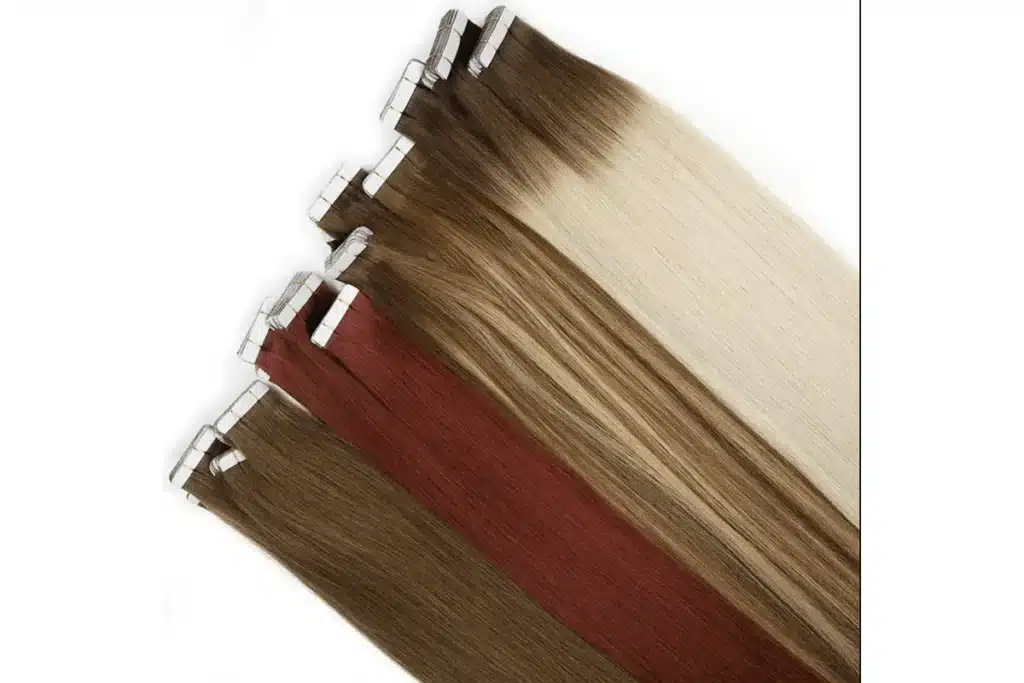
Tape-in extensions can look flat, natural, and easy to wear. But if clients wash too early, use oil near the tapes, or brush too roughly, the result can fail fast.
To care for tape in hair extensions, clients should wait 48 hours before washing, avoid conditioner or oil near the tape tabs, brush gently from the ends upward, sleep with dry hair, and return to the salon every 6–8 weeks for maintenance. For salons and hair brands, good aftercare also depends on tape quality, full cuticle hair, and clear client education.
This guide explains the daily care steps, common mistakes, salon notes, and product quality checks that help tape-ins last longer and reduce after-sales complaints.

Why Tape In Care Is Non-Negotiable
Let’s get real: Tape-ins live in the danger zone. Sweat, oils, and heat break down the adhesive, leading to slippage, matting, or worse—damaged client hair. I’ve seen stylists blame “cheap tapes” for failures, but 90% of the time? It’s poor aftercare.
The stakes:
Client retention: Badly maintained tapes = negative reviews.
Profit loss: Frequent replacements eat into your margins.
Health risks: Trapped debris can cause scalp irritation (yikes).
Post-Installation Care: Day 1 to Day 30
The 24-Hour Rule
Fresh tapes need 24-48 hours to fully bond. Tell clients:
No washing, sweating, or heat styling.
Sleep on a silk pillowcase (less friction = happier tapes).
Washing Like a Pro
Most clients scrub their scalps like they’re degreasing engine parts. Teach them this instead:
Flip hair upside down.
Massage shampoo only at the roots—never tug tapes.
Rinse vertically to prevent tangling.
Product Pitfalls
Oil is the enemy. Recommend:
Water-based leave-ins (avoid the tape area).
Dry shampoo for oily roots (spray 6+ inches away).
Professional Notes for Salons and Hair Brands
Tape-in care is not only a client habit issue. It is also a salon service issue.
If the stylist does not explain aftercare clearly, the client may use conditioner near the tape, sleep with wet hair, or apply oil to the root area. When slipping happens, the client usually blames the salon first.
For salons, the safest approach is to give every tape-in client a short written aftercare guide. The guide should explain the first 48 hours, washing rules, brushing method, sleeping care, heat styling limits, and maintenance schedule.
For hair brands and wholesale buyers, aftercare education should also be part of the product package. A good tape-in product is easier to sell when the buyer can also give clear care instructions to salons and end clients.
Product Fit: Which Tape-In Structure Performs Better?
Different tape-in structures can create different results. Buyers should choose the structure based on the client’s hair density, salon service style, and market positioning.
| Tape-In Structure | Best For | Buyer Benefit | Risk to Check |
|---|---|---|---|
| Classic tape-in | Most salon clients | Stable, familiar, easy to install | Tape residue and tab thickness |
| Invisible tape-in | Clients who want a flatter root look | More natural near the scalp | PU quality and injection finish |
| Mini tape-in | Fine hair or small placement areas | Lighter and more flexible | Too little hair per piece |
| Slim tape-in | Clients who dislike bulky tabs | Flatter wearing feel | Adhesive strength |
| Long tape weft | Faster installation for volume | Efficient salon service | Cutting, tape hold, sectioning |
| Genius tape weft | Premium flat application | Better comfort and cleaner finish | Construction consistency |
For salons, the right structure reduces complaints. For wholesale buyers, the right structure improves repeat orders.
Salon-Grade Maintenance Programs
Turn tape-in upkeep into a revenue stream:
1. The “Refresh & Reset” Service
Offer a 30-minute slot for:
Tape cleansing with alcohol-free adhesive remover.
Heat reactivation (using a warm tool to reseal tapes).
Edge touch-ups for grown-out roots.
2. Client Education Kits
Sell curated kits with:
Loop brush + sulfate-free mini shampoo.
Mini bottle of tape-safe conditioner.
Silk scrunchie (brand it with your salon’s logo).
When to Say “No” to DIY
Some clients will try to remove tapes at home. Show them this horror story:
Client A used coconut oil to “dissolve” tapes. Spoiler: It worked… along with chunks of her natural hair.
Your Script:
“Tapes need professional removal every time. We use medical-grade solvent that protects your hair—kitchen hacks don’t.”
The Lifespan Hack 90% of Salons Miss
Rotate tapes every 3-4 months. Why? Adhesive weakens with each reapplication. Keep two sets per client:
Set A: Active.
Set B: Deep-cleaned, stored in adhesive primer.
Swap them during adjustments. Clients get longer wear, and you control the maintenance cycle.
Pro Tip: Use a toothbrush dipped in 91% alcohol to clean old tapes. Gets rid of gunk without damaging the adhesive.

Factory Quality Notes for Wholesale Buyers
Good tape-in care cannot fix poor hair quality or weak adhesive.
If the hair is heavily coated, it may feel soft before washing but become dry after several washes. If the tape adhesive is unstable, clients may experience slipping even when they follow basic care rules.
From a factory point of view, wholesale buyers should test tape-in samples before bulk orders. The test should include washing, brushing, blow-drying, heat styling, tape hold, tape residue, shedding, and color stability.
| Quality Check | Why It Matters | What Buyers Should Do |
|---|---|---|
| Full cuticle hair | Helps softness and durability after washing | Wash and brush the sample several times |
| Tape adhesive | Affects slipping and reinstallation | Test hold, residue, and removal |
| PU tab quality | Affects comfort and flatness | Check thickness and flexibility |
| Color stability | Affects salon color matching | Compare before and after washing |
| End fullness | Affects premium salon results | Check density from top to ends |
A good supplier should not only say the hair is soft. A good supplier should explain how the tape performs, how the hair behaves after washing, and what aftercare conditions may affect the result.
FAQ: Tape In Extension Care (Salon Owner Edition)
How long should clients wait before washing tape-in extensions?
Clients should usually wait 48 hours before washing. This helps the adhesive settle and reduces early slipping risk.
Can clients use conditioner on tape-in hair extensions?
Clients can use conditioner on the mid-lengths and ends, but not near the tape tabs. Conditioner near the adhesive can cause slipping.
How often should tape-in extensions be moved up?
Most tape-in extensions need salon maintenance every 6–8 weeks, depending on hair growth, client care, and tape condition.
Why do tape-in extensions slip?
Tape-ins may slip because of oil, conditioner, sweat, heat, early washing, poor sectioning, weak adhesive, or wrong aftercare.
Can tape-in hair extensions be reused?
Yes, many tape-ins can be reused if the hair quality is still good. The old tape should be removed and replaced with new tape tabs.
What should wholesale buyers test before ordering tape-ins?
Buyers should test hair softness after washing, tape hold, residue, shedding, PU tab thickness, color stability, and reuse performance.

Final Thought
For salon owners, hair extension brands, and wholesale buyers, tape-in care problems are not always caused by the client. Hair quality, tape adhesive, PU tab construction, and supplier consistency also matter.
If you are comparing tape-in hair extensions for salon service or private label wholesale, you can request samples first. Test the hair after washing, brushing, heat styling, and tape removal before placing a bulk order.
You can contact Hibiscus Hair for tape-in extension samples, color matching support, and wholesale price guidance.