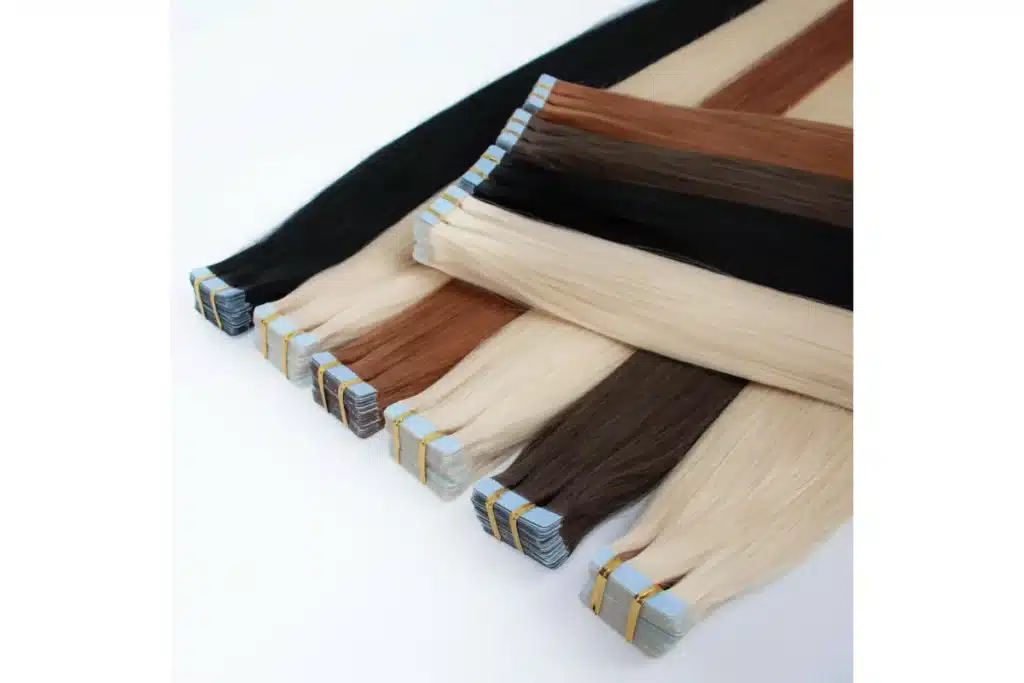
Clients usually ask one simple question: how long do tape-in hair extensions last? The honest answer depends on whether we are talking about the tape installation or the hair itself.
Tape-in hair extensions usually need a move-up every 6–8 weeks because natural hair growth pushes the tape tabs downward. The hair itself can last much longer when it is high quality, maintained correctly, removed gently, and re-taped properly.
For salons and hair extension buyers, this difference matters. A client may think the extensions “only last 8 weeks,” when actually the tape needs maintenance every 6–8 weeks, while good full cuticle hair may be reused through multiple installation cycles.

How Long Do Tape-In Hair Extensions Last?
Tape-in extensions usually stay in place for about 6–8 weeks before they need a move-up. This is the normal maintenance window, not necessarily the full lifespan of the hair.
The tape tabs move down as natural hair grows. When the tabs sit too far from the scalp, they may show, twist, pull, or feel loose. That is why salons should schedule regular maintenance before the extensions become uncomfortable.
The extension hair can often be reused if it is still soft, full, and smooth after removal. The old tape must be removed, the tab area cleaned, and new tape applied before reinstalling.
1. Standard Lifespan of Tape-In Extensions
Most tape-in extensions need maintenance every 6–8 weeks. Some clients may need a move-up closer to 5–6 weeks if their hair grows quickly, their scalp is oily, or their aftercare routine weakens the adhesive.
The tape installation should not be left too long. Grown-out tape tabs can twist, pull, mat near the roots, or become visible.
After removal, the hair may be reused for another cycle if the quality is still good. This depends on hair quality, adhesive removal, washing, brushing, and how well the client cared for the extensions during wear.
2. Hair Quality: A Major Factor
Hair quality is one of the biggest reasons some tape-in extensions can be reused while others need replacing quickly.
Full cuticle hair usually has better softness, smoother movement, and stronger reuse potential because the cuticle surface is better protected. It is less likely to become dry or tangled after washing.
Remy hair can still perform well, but the result depends on how the hair was processed. Some Remy hair lasts well. Some heavily processed Remy hair becomes dry faster.
Non-Remy or heavily coated hair may feel soft at first, but it often becomes rough, tangled, or thin after several washes. Once the hair becomes difficult to brush, clients may pull harder, which can also stress the tape area.
| Hair Quality | Typical Performance | What Salons Should Watch |
|---|---|---|
| Full cuticle hair | Better softness and reuse potential | Higher cost, but lower complaint risk |
| Remy hair | Can perform well when processed carefully | Quality varies by supplier |
| Heavily processed hair | May feel soft at first | Higher risk of dryness and tangling |
| Non-Remy hair | Shorter usable life | More tangling, shedding, and early replacement risk |

3. Maintenance Matters
Maintenance affects both tape hold and hair lifespan.
Avoid oils and conditioners near the tape. Oils, masks, heavy conditioners, and serums near the roots can weaken adhesive and cause slipping. Clients should apply nourishing products only from mid-lengths to ends.
Brush gently and regularly. Clients should use an extension brush and support the tape area with one hand when detangling. Brushing should start from the ends and move upward.
Avoid direct heat on the tape tabs. Heat tools can be used on the hair, but they should not press directly on the tape. Excessive heat can affect adhesive performance.
Keep roots dry before sleeping. Sleeping with wet tape-ins can create matting near the tabs and shorten the wear cycle.
Return for maintenance on time. Most clients should return every 6–8 weeks. Waiting too long can create twisting, pulling, or root stress.
For detailed daily care, salons can also read our guide on how to care for tape in hair extensions.
4. Application Quality: Why It Matters
Tape-in extensions last longer when the tabs are applied to clean, dry hair and sealed with full adhesive contact.
If too much natural hair is placed between the tape tabs, the adhesive may not seal properly. If too little hair is used, the section may feel pulled or weak. If the tabs are placed too close to the scalp, the client may feel discomfort and the tapes may not move naturally.
A good tape-in installation should feel flat, secure, and comfortable. The tape should not lift, fold, or pull. For salons, clean sectioning and proper pressure during application can reduce early slipping and callbacks.
Extending the Lifespan of Tape-In Extensions
Extending the Lifespan of Tape-In Extensions
Tape-in lifespan is not controlled by one factor. It comes from the combination of hair quality, adhesive quality, installation, aftercare, and timely maintenance.
Now that we know how long tape-in extensions generally last, let’s talk about how to extend their life even further.
1. Proper Aftercare
Proper aftercare helps the tape stay secure and keeps the hair softer for longer.
Clients should avoid washing too soon after installation. Many salons recommend waiting at least 48 hours before the first wash so the adhesive can settle properly.
They should avoid applying oil, masks, or heavy conditioners near the tape tabs. These products can weaken the adhesive and cause slipping.
Swimming, saltwater, chlorine, and heavy sweating can shorten the wear cycle if the client does not rinse, dry, and care for the extensions properly afterward.
A silk pillowcase, loose braid, and dry roots before sleep can also reduce friction and matting.
2. Signs It’s Time to Replace or Move Up the Extensions
A move-up is normal. Replacement is only needed when the hair itself no longer performs well.
| Sign | Usually Means | What the Salon Should Do |
|---|---|---|
| Tape tabs have grown far from the scalp | Natural hair growth | Schedule a move-up |
| Tape is lifting | Adhesive weakened or poor aftercare | Remove, clean, and re-tape |
| Extensions are slipping | Oil, product buildup, or poor seal | Check aftercare and tape quality |
| Tangling near the roots | Shed hair buildup or late maintenance | Remove and detangle carefully |
| Hair feels dry or rough | Hair quality or care issue | Treat or replace if needed |
| Ends look thin | Hair has worn down | Replace the set if it no longer blends |
Clients should not wait until the extensions feel uncomfortable. Early maintenance protects both the natural hair and the extension hair.
Can Tape-In Extensions Be Reused?
Yes, tape-in extensions can often be reused if the hair quality is still good and the removal is done carefully.
During a move-up, the stylist removes the old tape, cleans the tape tab area, applies new adhesive, and reinstalls the extensions. The hair can be reused if it remains soft, full, smooth, and easy to brush.
If the hair has become dry, thin, tangled, or heavily shedding, re-taping may not be worth it. In that case, replacing the hair is safer than forcing another installation cycle.
For salons and hair brands, reuse performance is one of the best ways to judge tape-in quality.
What Salons and Buyers Should Test
For professional buyers, tape-in lifespan should be tested before larger orders.
A sample should not only feel soft in the package. It should be washed, brushed, removed, re-taped, and checked again.
| Test Item | Why It Matters |
|---|---|
| Tape adhesive | Affects 6–8 week hold |
| PU tab flexibility | Affects comfort and flatness |
| Hair softness after washing | Affects reuse and client satisfaction |
| Color stability | Affects repeat salon matching |
| End fullness | Affects premium appearance |
| Re-taping performance | Affects salon value |
Professional buyers can compare our tape-in hair extensions when checking adhesive quality, hair lifespan, and private label options.
FAQs About Tape-In Extension Lifespan
How long do tape-in hair extensions last?
Tape-in extensions usually need a move-up every 6–8 weeks. The hair itself may last longer if it is high quality and cared for properly.
How many times can tape-in extensions be reused?
They can often be reused for multiple cycles when the hair remains soft, full, and smooth. The old tape must be removed and replaced before reinstalling.
Why do tape-in extensions slip?
Tape-ins may slip because of oil, conditioner near the tape, poor adhesive, washing too soon, or incomplete sealing during installation.
How do I know when tape-ins need replacing?
They may need replacing when the hair becomes dry, tangled, thin at the ends, sheds heavily, or no longer blends well.
Can tape-ins last longer than 8 weeks?
Some clients may wear them slightly longer, but leaving tape-ins too long can cause twisting, matting, or root stress. Most salons recommend maintenance every 6–8 weeks.
Conclusion
Tape-in hair extensions usually need a move-up every 6–8 weeks, but the hair itself can last longer when the quality, installation, removal, and aftercare are controlled.
For salons, the most important point is to explain the difference between tape maintenance and hair lifespan. For professional buyers, the best test is not the first touch. It is how the hair performs after washing, wearing, removing, re-taping, and reinstalling.
You can contact Hibiscus Hair to request tape-in hair extension samples, adhesive testing support, or wholesale price guidance before placing a larger order.